
Beyond the Forecourt: How Fuel Retailers Can Build Lasting Competitive Advantage
Why the next phase of fuel retail competition will be won in financial services, from self-acquiring to card issuance under a PI or EMI licence.

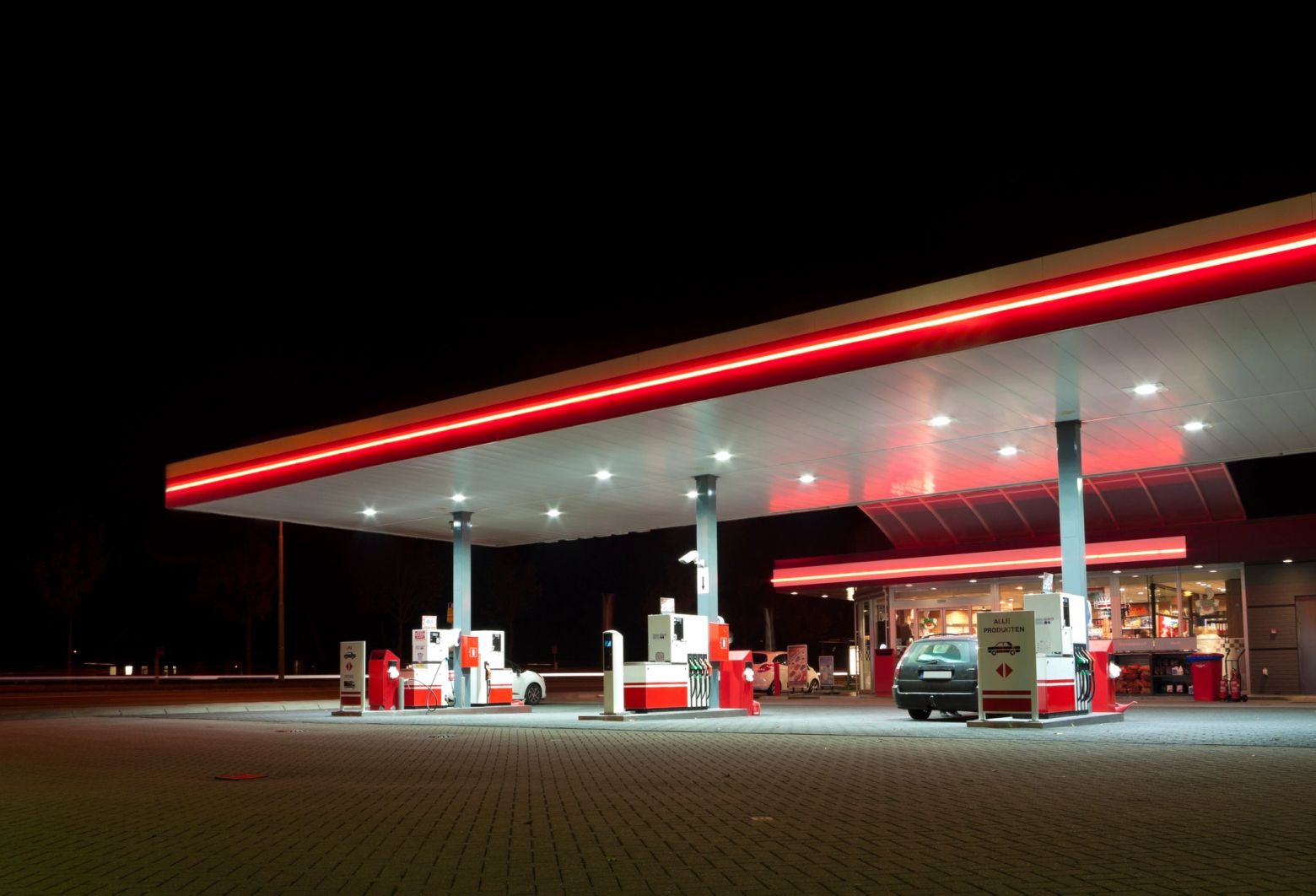
Fuel retail has always been a volume game — thin margins, high throughput, relentless price competition. But the next phase of competitive differentiation will not be won at the pump. It will be won in the financial services layer that sits above it.
1. The Commoditisation Problem
Across the UK and Europe, large fuel retailers face a structural challenge that is not going away: the core product — fuel — is almost perfectly commoditised. Consumers choose on price and convenience, loyalty is shallow, and margin pressure is chronic. The rise of electric vehicles adds a further long-term headwind: as EV adoption accelerates, the traditional pump-based volume model will come under sustained pressure over the next decade.
In this context, the retailers that will outperform are those that deepen their relationship with the customer beyond the transaction itself. Retail convenience, foodservice, and car wash have each played a role in this evolution. Financial services is the next — and arguably the most powerful — frontier.
The logic is straightforward: payments and credit touch every interaction a customer has with a retailer. Done well, financial services do not just generate standalone revenue; they generate data, loyalty, and frequency that compound across the entire commercial relationship.
2. What 'Participation' in Financial Services Actually Means
Many fuel retailers already have some financial services exposure — typically via a co-branded credit card arranged through a banking partner, or a fleet card programme. These are useful, but they represent the shallow end of the opportunity. The depth of participation can be understood across four distinct levels:
- Passive acceptance — accepting card payments via a third-party acquirer. Standard practice, minimal differentiation.
- Co-brand partnership — partnering with a bank or card issuer to offer a branded card. Revenue share model; limited control.
- Active issuance — obtaining an e-money or payment institution licence to issue cards directly (prepaid, debit, or credit), controlling the customer relationship, pricing, and data.
- Self-acquiring — becoming a direct acquirer of card scheme transactions at your own sites. The acquirer's markup — typically 4–5 bps for a large retailer — is recovered directly rather than paid to a third-party bank.
Most large UK and European fuel retailers currently operate at levels one or two. The commercial and strategic opportunity lies in moving to levels three and four — and the regulatory environment has never been more enabling.
3. The PSD2 Enabler: Why the Regulatory Window Is Open
The Second Payment Services Directive (PSD2), implemented across the EU and incorporated into UK law post-Brexit via the Payment Services Regulations 2017, fundamentally changed who can participate in financial services. Critically, it is not just for banks.
PSD2 created the Payment Institution (PI) licence category, which allows non-bank entities to:
- Acquire card payments under their own scheme licence from Visa and Mastercard.
- Issue payment instruments — including prepaid and, in some structures, credit cards — under their own regulatory authorisation.
- Act as a payment aggregator, collecting and disbursing payments on behalf of third parties.
For fuel retailers, this is transformative. The traditional argument that financial services required a banking partner — and the revenue share, loss of data, and strategic dependency that entails — no longer holds.
4. The Commercial Case: Where the Returns Come From
Self-Acquiring
A large retailer with €5bn in annual card-paid fuel transactions would recover approximately €2–2.5 million per year in acquirer's margin. A direct, recurring, low-risk return — and the entry point to everything else.
Card Issuance
As an issuer, interchange accrues on every transaction made on the card — at your own sites and everywhere else. For SME charge cards, commercial interchange rates of 100–125 bps are typical in Europe.
Prepaid Cards
Open-loop prepaid cards issued under an e-money licence establish loyalty relationships early in the driving lifecycle — targeting younger drivers and career-starters who don't yet qualify for credit products.
Data & Analytics
The most durable prize. A retailer that is also issuer and acquirer sees the complete customer spend profile — fuel, grocery, travel, dining — enabling precision marketing no third-party model can replicate.
On the acquiring margin: The MDR has three components — interchange and scheme fees (both non-negotiable, set by the card networks) and the acquirer's margin (the only element a retailer eliminates by self-acquiring). For a large retailer with significant volumes and commercial leverage, the acquirer's margin is typically 4–5 basis points. On €5 billion in card-paid transactions, that is €2–2.5 million annually. Modest on its own — but the PI licence that delivers it is the same licence that unlocks issuance, payment aggregation, and the richer economics above.
5. Proven Precedents — European Competitors Are Already Moving
The proposition is not theoretical. Two of the most instructive examples from European markets are explored in depth as case studies in the full paper.
ENI (Italy)
ENI built what was, at its peak, the most comprehensive consumer financial services programme deployed by a European fuel retailer — a suite of prepaid, reloadable, and credit cards co-branded with CartaSi and accepted on the Mastercard network at over 30 million merchant locations. Within one year of launch, 2.8 million customers were active and card-linked volumes accounted for 37% of all network fuel throughputs. ENI also built Italy's largest contactless acceptance network across its forecourt estate. The programme was executed entirely through a co-brand model — without ENI holding its own payment licence.
OMV (Austria)
OMV co-founded the jö Bonus Club with REWE Group, creating a coalition loyalty programme that reached over 4 million members — nearly half the Austrian population. The programme added an integrated mobile payment function. On the fleet side, OMV's card is accepted at over 21,000 stations across 34 European countries through the ROUTEX network. Again, this was achieved without OMV holding a payment institution licence of its own.
Here's a counter-factual: what if the largest fuel retailers in Europe owned the licence rather than rented it? Every transaction processed at their network would generate an acquiring margin that stays in-house rather than flowing to a third-party bank. Every transaction their cardholders make anywhere in the world would generate interchange that accrues to them rather than to a licensed intermediary. A Payment Institution licence captures the first; an E-Money Institution licence captures the second. The customers are already there. The volumes are already there. The economics simply go elsewhere.
6. A Practical Pathway: The Four-Stage Model
- Strategic scoping and business case — Define target customer segments (consumer, SME, fleet), select the product portfolio, and build the financial model. Identify the country of acquiring operations — the acquirer's location determines the applicable interchange regime under cross-border acquiring rules.
- Licensing and regulatory authorisation — Establish a financial services subsidiary and apply for the relevant PI or EMI licence with the FCA (UK) or the appropriate national authority in Europe. Simultaneously initiate the Visa and Mastercard scheme membership application process.
- Technology and service provider selection — Run a structured RFP for card management systems, issuing and acquiring processing services, and terminal infrastructure. Evaluate whether existing co-brand or loyalty partners can transition into processing service provider roles.
- Launch and scale — Begin with self-acquiring at owned sites — lowest complexity, fastest payback. Layer in prepaid card issuance. Scale into SME and consumer credit card programmes integrated with the loyalty programme. Deploy data and analytics to optimise the commercial model on an ongoing basis.
7. Challenges to Navigate
- Regulatory and compliance investment is real. The PI or EMI licence demands robust AML, KYC, consumer protection, and capital adequacy frameworks. These are not insurmountable for a large retailer, but they require dedicated resource and board-level commitment.
- Organisational capability gaps. Fuel retailers are not naturally financial services businesses. Building or acquiring the skills to underwrite credit risk, manage card operations, and interpret transactional data requires deliberate investment — through hiring, acquisition, or partnership.
- Technology integration. Connecting card management systems with forecourt POS infrastructure, loyalty platforms, and marketing systems is technically complex. A clear architecture decision — build, buy, or partner — needs to be made early.
- Change management. Internal stakeholders — operations, finance, legal — will need to understand and support a fundamentally new business line. The case for leadership alignment should be built before external announcements.
8. The Strategic Imperative
The fuel retail sector is at an inflection point. The structural tailwinds that sustained the traditional model — rising car ownership, cheap credit, abundant fuel demand — are moderating. The retailers that will prosper over the next decade are those building diversified, data-rich customer relationships that extend beyond the forecourt transaction.
Financial services is not a distraction from that core mission. It is, increasingly, central to it. The combination of PSD2 regulatory enablement, proven international precedent, maturing fintech infrastructure, and the sheer scale of card volume flowing through fuel forecourts creates a once-in-a-generation window to act.
The question for fuel retail CEOs and their boards is not whether to engage with financial services more deeply. It is how quickly — and how ambitiously — to move.
Key Actions for Leadership Teams
- Commission a rapid assessment of current card processing volumes and the acquirer's margin being paid to your third-party acquirer — this is the most immediate financial case for a PI licence.
- Review your loyalty programme data asset and assess whether a proprietary card product could deepen engagement with your top-value customer segments.
- Engage your legal and compliance team on the FCA Payment Institution licence pathway and timeline.
- Benchmark against European peers (ENI, OMV, Repsol) and consider whether a phased approach — self-acquiring first, card issuance second — is the right entry sequence for your business.